
Back to September 2026 Newsletter
Behind the Scenes at Seeds of Diversity - Germination tests

One of the most important things we do in our Seed Library collection are germination tests. When seeds age, they lose their ability to germinate (it's called seed viability) and we can't let that happen.
The problem is, there's no way to tell a seed's viability just by looking at it, weighing it, or even by its age. We have to plant a few, and see what happens.
Every seed contains a living plant and some food which eventually gets used up. When the seed eats all of its stored food, it dies, which is why old seeds don't germinate. We can make our seeds last longer by making the seeds hibernate - keeping them as dry and cold as possible, even freezing them - so they eat their stored food slower. But that just prolongs the inevitable, and we always have to grow new seeds eventually. The question is, when?
We keep our long-term back-up seeds in a freezer, at about -10 Celsius, after drying them well with silica gel. Those seeds should last for up to 20 years, but it's prudent to test them after 10 years to make sure they're still okay. Our day-to-day working seeds are kept in jars in an air-conditioned storage room adjacent to our office. Depending on the species, some seeds only last a few years, while others can easily last for 8, 10 years, or maybe longer. We plan to use those seeds before they lose their viability, and we check them every 3 to 5 years to decide which to use, which to keep, and which to re-grow.
How to do a germination test
The simplest method is to just sow some seeds in the same conditions that you'd normally grow them. Pepper and bean seeds sprout in warm soil, so test them someplace warm. Lettuce and spinach seeds prefer cool soil, so test them someplace where the temperature is similar to a spring garden. That can be tricky if you want to do all your germination tests in the same place, so do it right and choose two places from the start: a nice warm heating vent and a cool windowsill for your seeds' different preferences.
Our favourite method is to fold a few seeds on a moist, brown paper towel, and slide it into a plastic zip bag. Sealed up, you can put that near a heating vent without having to water it every day, or you can put it near a cool window to simulate cool soil for lettuce seeds and other greens. The clear bag lets you see what's happening, and within a week or 10 days you should see exactly what's happening. Why brown paper towel? Any colour works just as well, but it's easier to see light-coloured sprouts against the wet brown paper.
Once the sprouts are an inch or two long, they've probably germinated as much as they ever will, so it's time to count. The number of sprouts divided by the number of seeds, times 100, is your germination percentage. Sometimes you'll see some seeds with tiny roots just starting to emerge. We count those, because they're going to keep sprouting. We also take that as a sign that we should wait a little longer in case there are other seeds almost-sprouted, and we count again a few days later.
How many seeds should you test?
There is a fundamental trade-off between accuracy and expense. The more seeds you test, the more accurate your test will be, but it will cost you more time and more seeds. Sadly, once you've sprouted any seeds you have to either keep growing them immediately, or discard them. You can't push the roots back in.
Commercial seed companies are expected to test their seeds to a pretty exact accuracy: within a percentage point. That means statistically they have to test 400 seeds to get their result. The reason is that every seed germinates or doesn't germinate independently from the rest, but we want to use that result to predict what the rest of the seeds will do. Just because one seed sprouts doesn't predict that another one will, so only the average of 4 seeds is enough to predict what any other seed in the same jar will do.
400 seeds is a lot though! We only keep 400 to 800 seeds in each of our seed lots. Otherwise we'd run out of room for our collection. Do we really need that level of viability accuracy?
Fortunately, our Seed Library collection doesn't have to know exactly the germination rate of any seeds. We just need to know whether or not the seeds are getting to the point where we need to re-grow or replace them. Since we would make that decision for any seeds lower than 60% germination, whether that number comes out at 60%, 50%, or 40%, we simply don't need to know a very accurate result. In practice, we test 20 seeds to get a germination result that is plus-or-minus 20%, or sometimes even just 10 seeds to get a feeling of whether the seeds are "pretty good" or "pretty bad". If we need to know more, we can test more, but we definitely can't expend 400 seeds just to find out.
If you want to find out if a leftover packet of seeds is still good, just put 5 in a moist paper towel, or even a little pot of soil. The key is to remember how many you sowed, so you can judge the result.
If you want to be sure that your saved seeds are good enough to share with other gardeners, test 20 of them and look for a result of 70% or better.
Also, if the result comes out disappointingly low, it's worth trying again. Sometimes temperature or dryness can sabotage a germination test, so false negatives can happen. It isn't possible for dead seeds to accidentally sprout though, so have no fear of false positives.
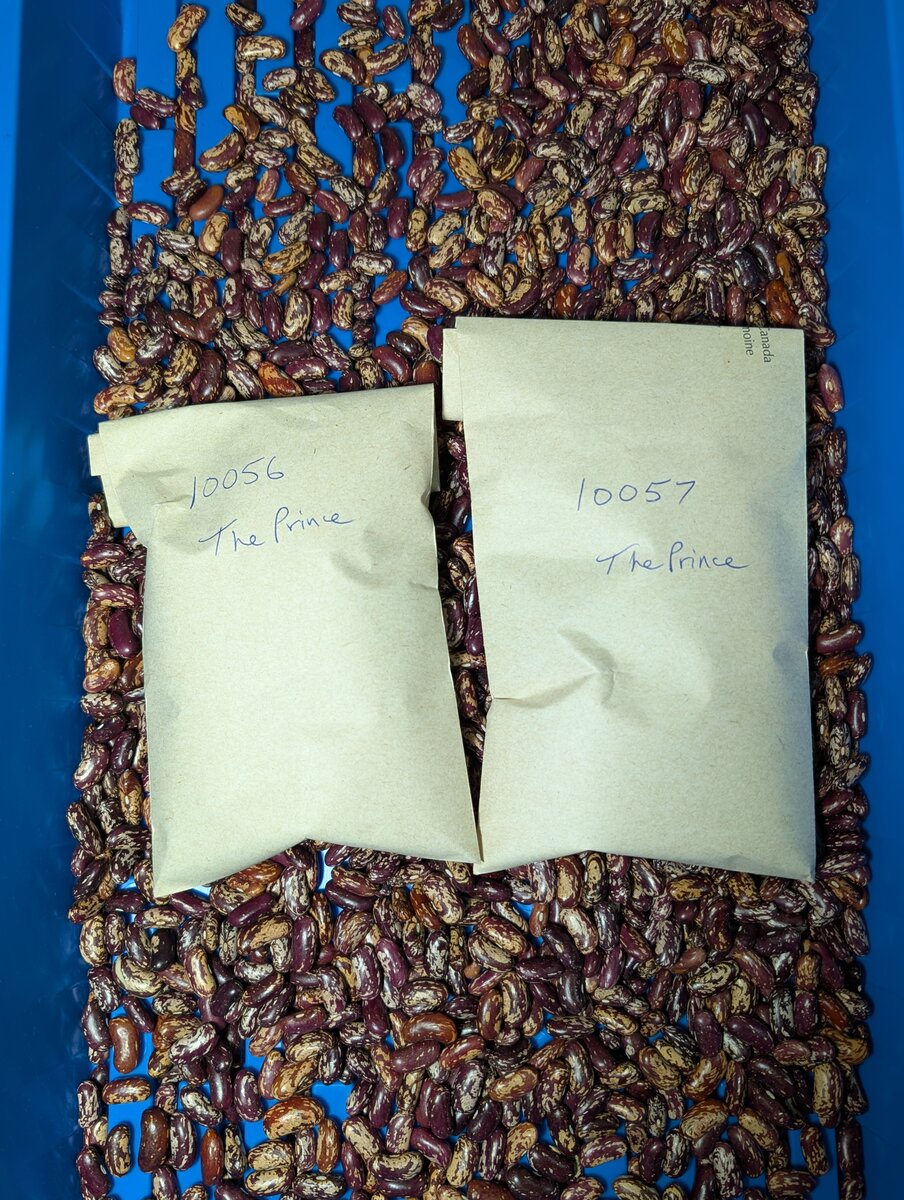
Two lots of The Prince bean ready for testing and storage
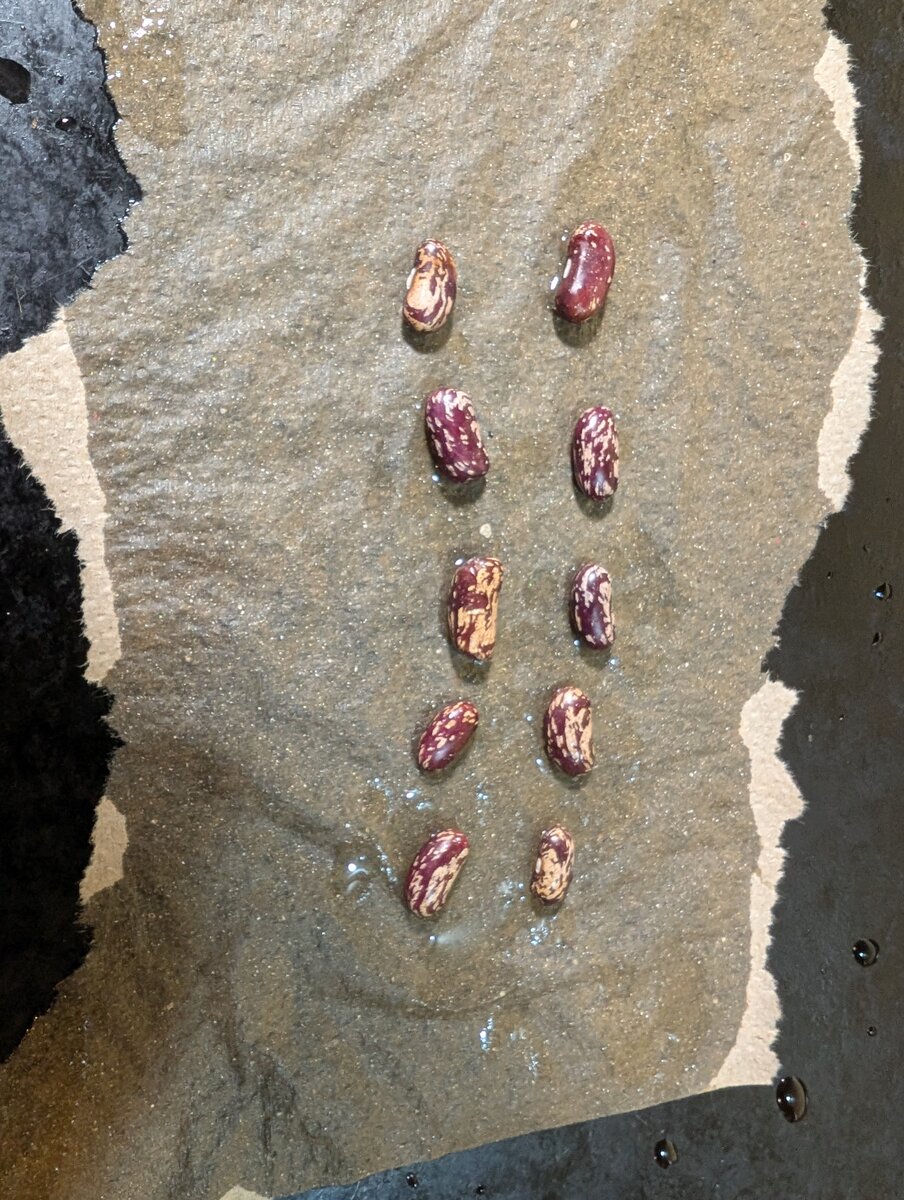
Ten seeds with enough moisture to soak without drowning them.
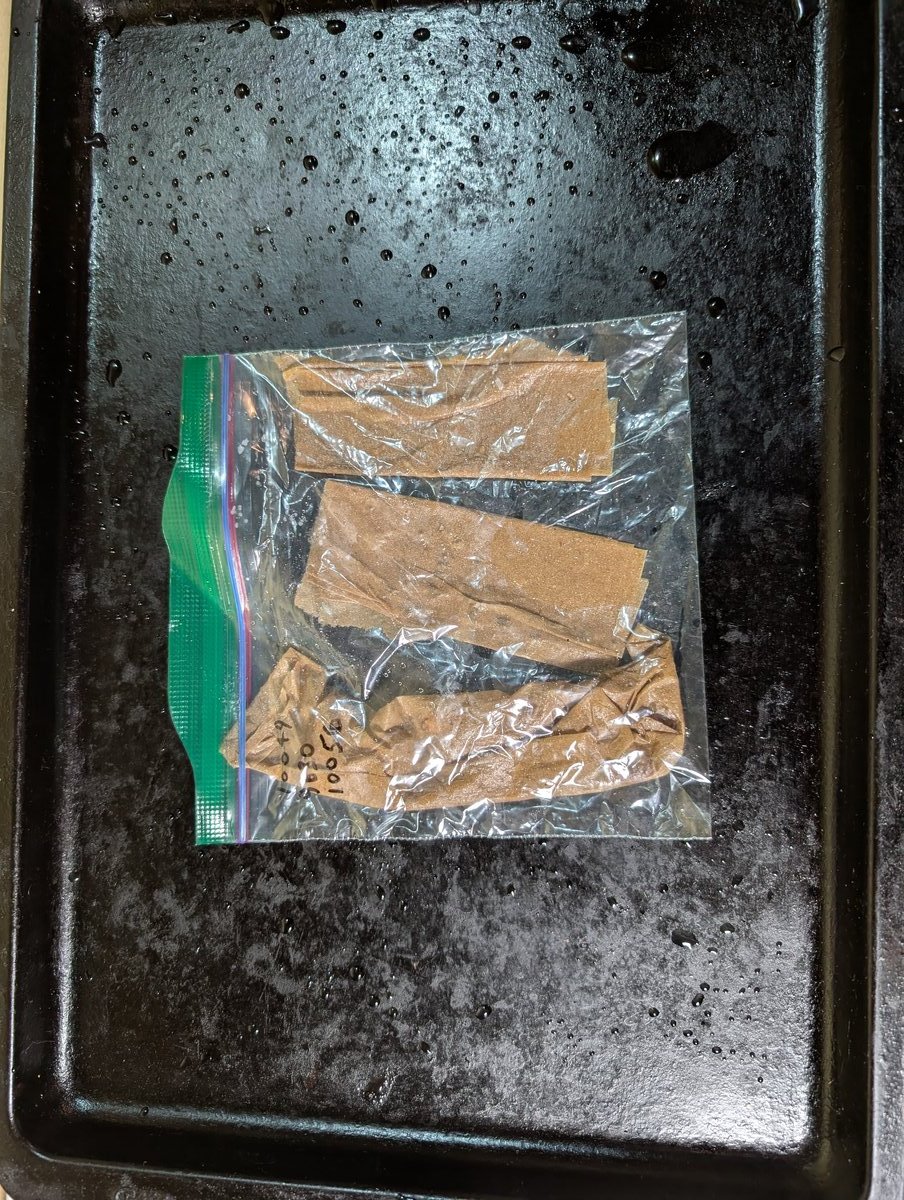
In a sealed plastic bag, near a heating vent, so the seeds will be warm but won't dry out.
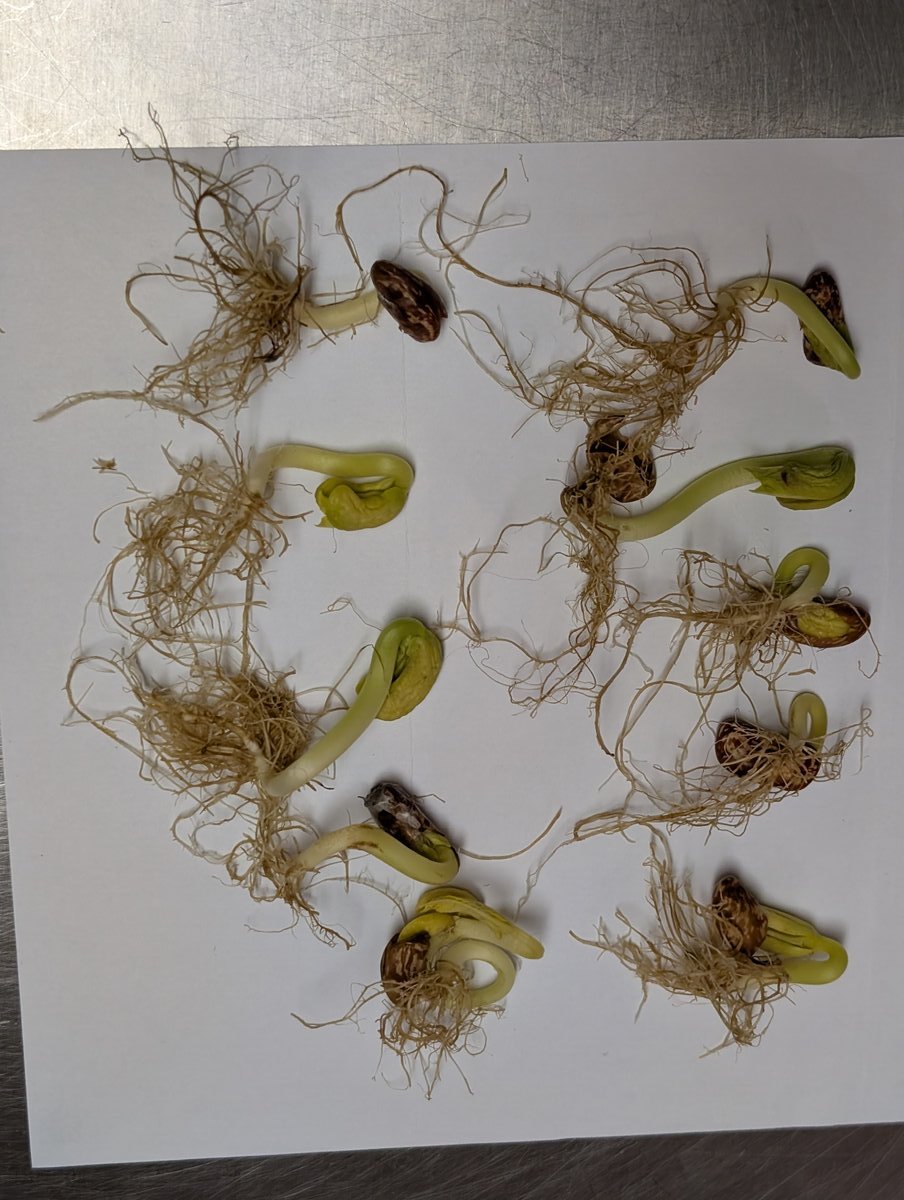
100%. This doesn't mean every one of the remaining seeds will grow though: the actual rate might be lower.
Predicting the future
Once we have a germination test, we know where our seeds stand. But how will their viability change in a year, or two, or five? It would be a lot of work for us to re-test all of our seeds every year, so instead we use early germination tests to model future viability for each seed lot.
Seeds follow a well-known pattern where germination declines slowly at first, then speeds up, then bottoms out gradually again. That means a seed lot that starts at 100% germination could be at 90% after a few years, but then it could drop to only 60% after just a few more. After that, it would have a low germination rate, but that rate could last for several more years because some seeds in every batch are just survivors.
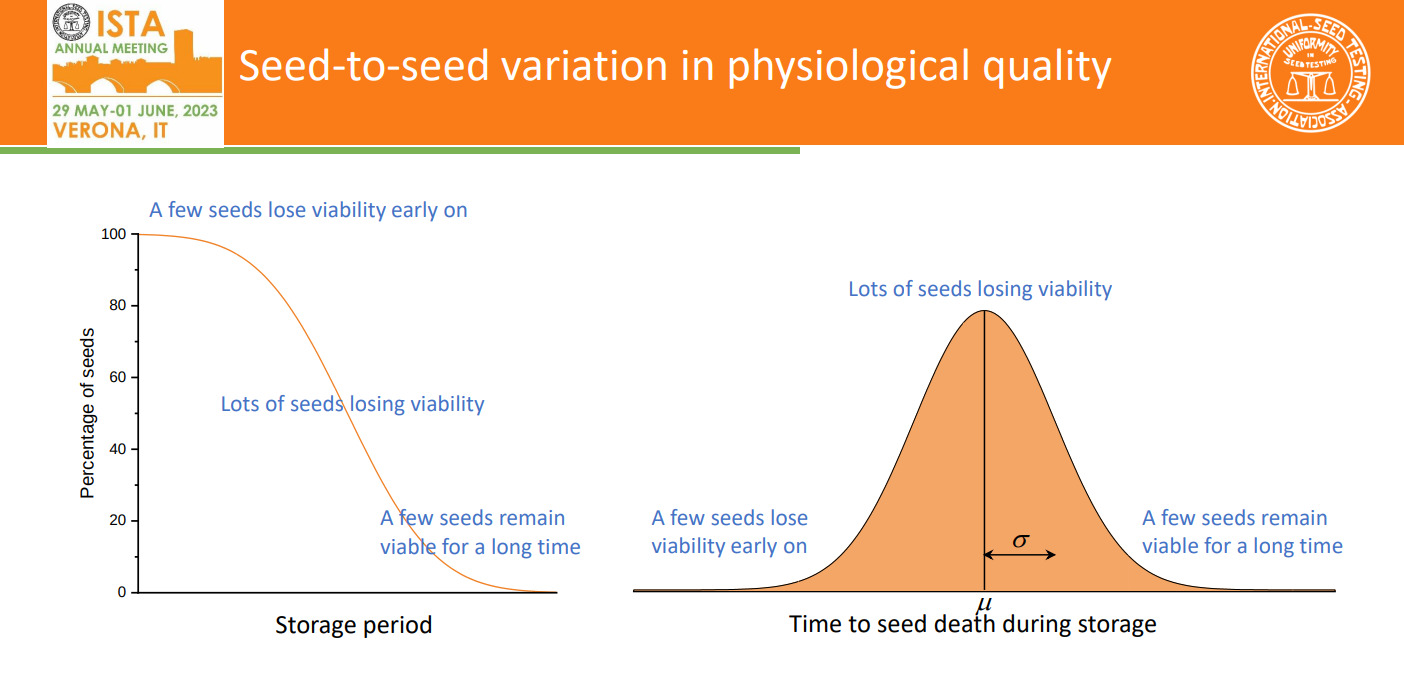
Thanks to the International Seed Testing Association
We can use this math to fit a standard germination curve to any seed lot, as long as we have two germination tests. Usually, we can get a germination rate from seeds that come from an established seed company, and we habitually test the seeds that our seed-grower volunteers send from their gardens. After a few more years, another test will tell us where the seeds sit on the germination curve, and that fixes the rest of their future. It's always good to re-test after five years or so, but we rely on good data and computer algorithms to help us understand which of our seeds will need to be re-grown, and when.
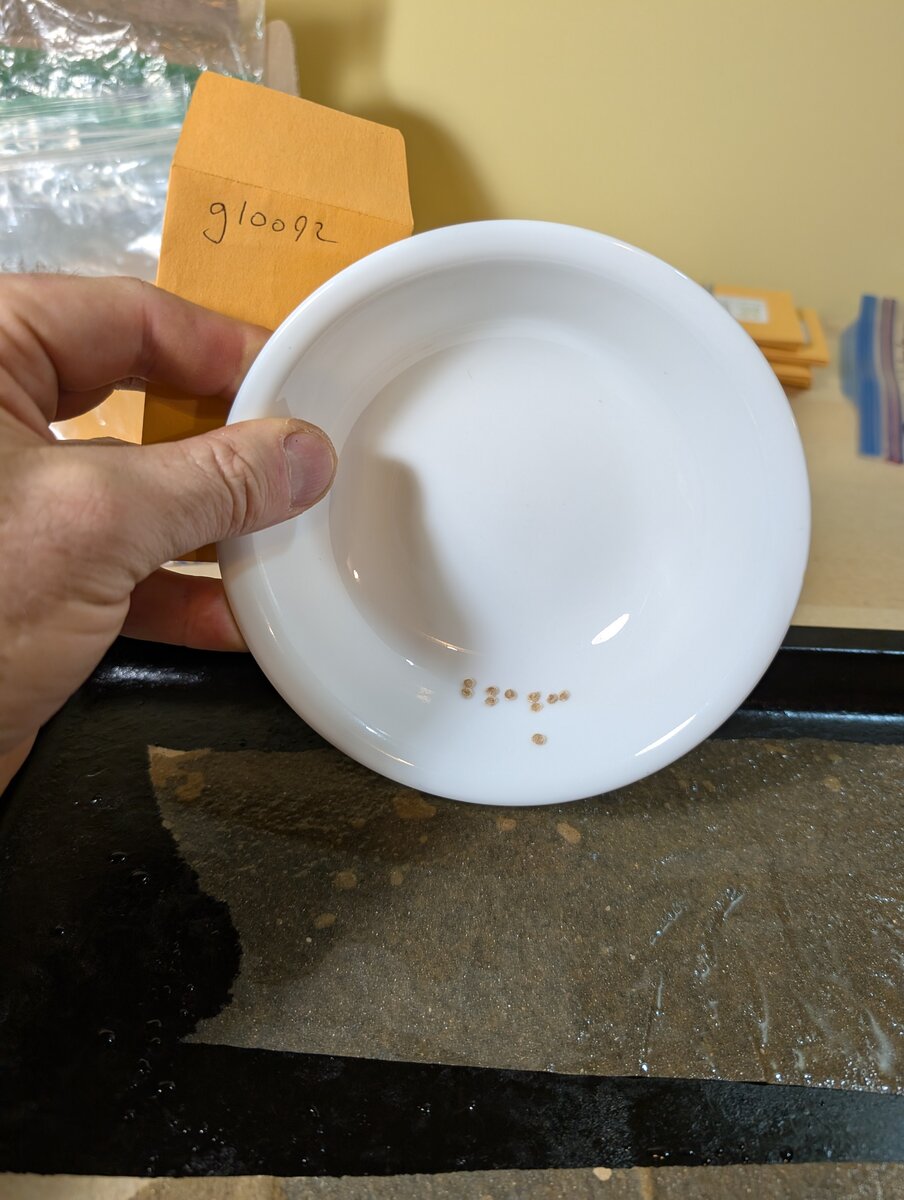
"g10092" means ten seeds to test germination of lot 10029 (it's Andy's Buckflats Wonder tomato)
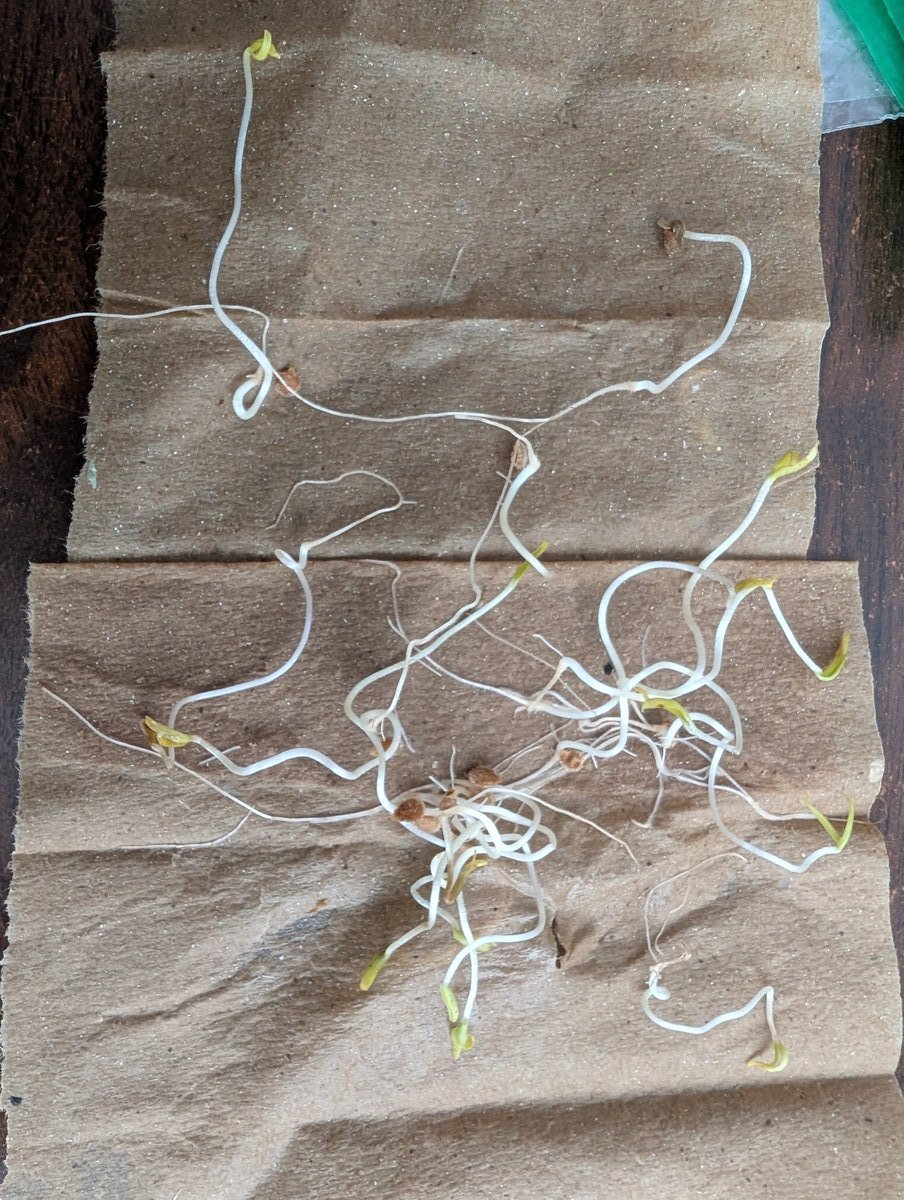
Tweezers help us sort out which seeds sprouted and which didn't. If in doubt, count the green heads.
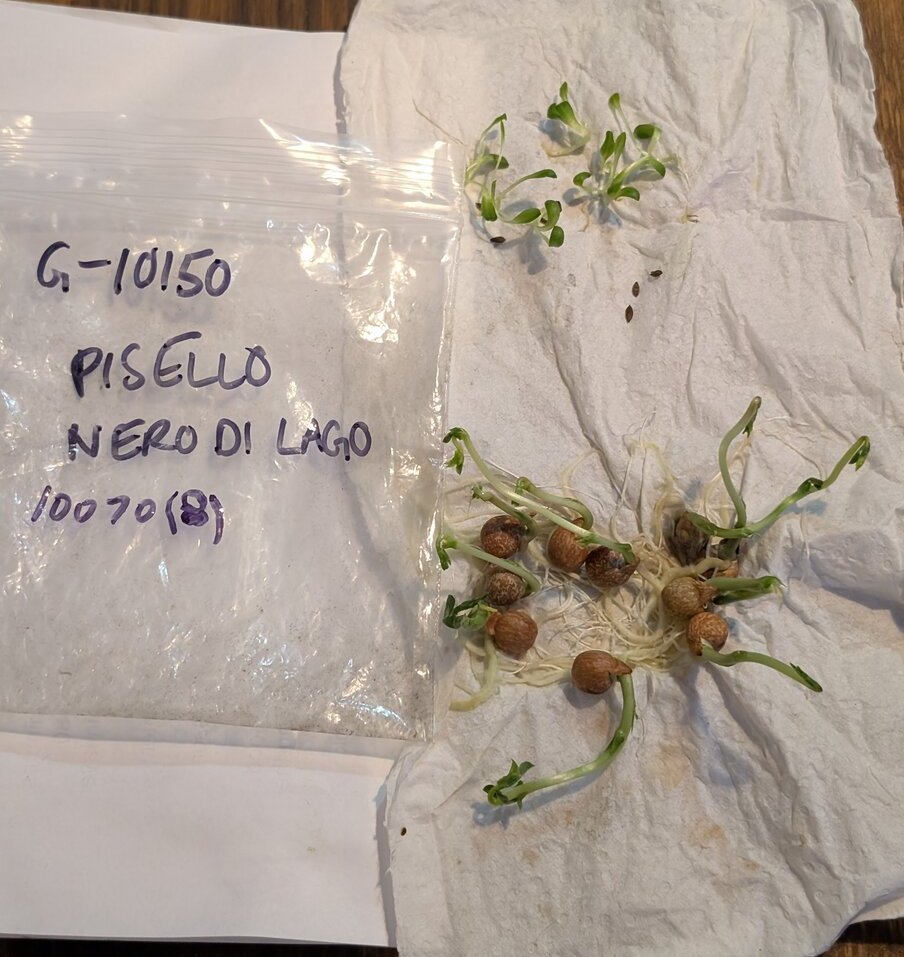
We can test more than one kind of seed in each batch, as long as we can see the difference. Lettuce (top) and pea (bottom) seeds are easy to tell apart.
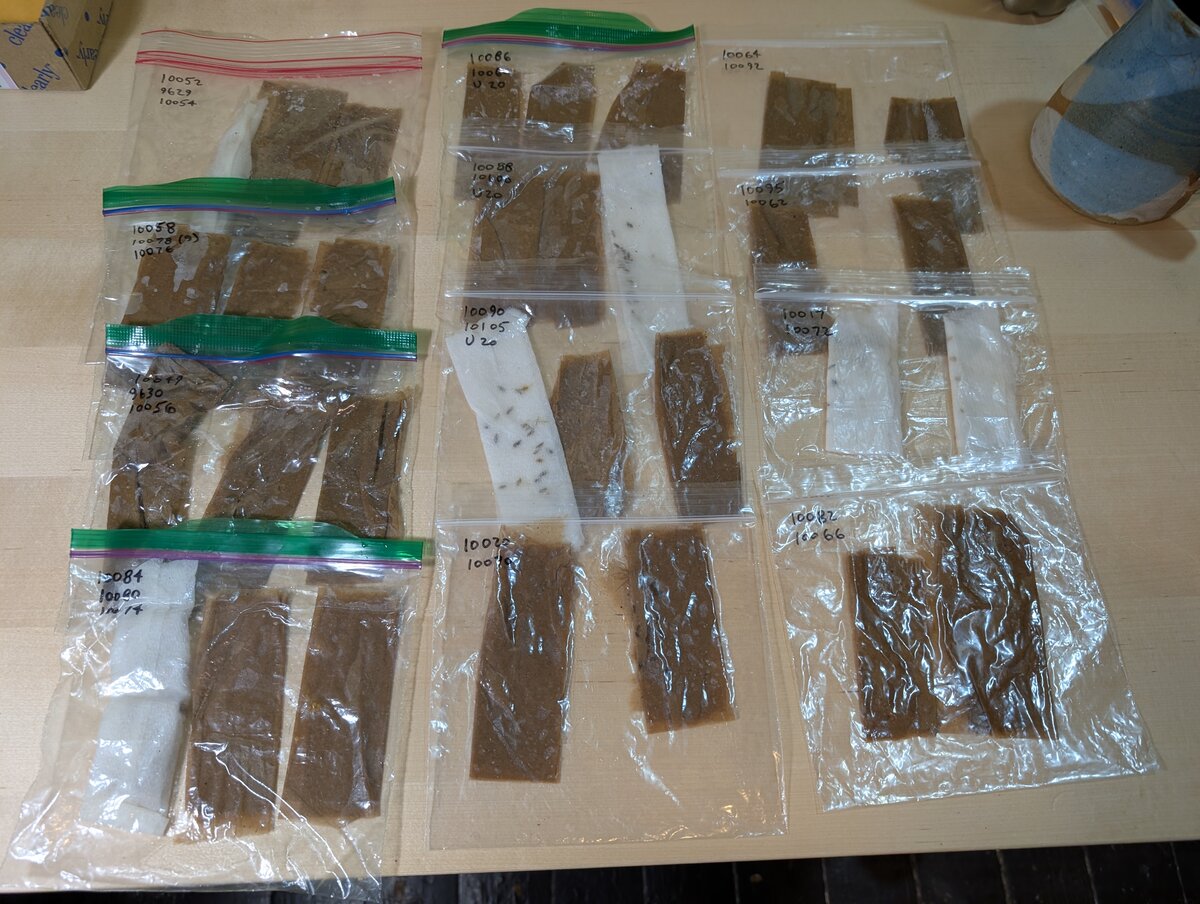
Every folded paper towel has a different seed test, labeled by lot numbers on the bags. These have bean, tomato, and pepper in different combinations of warm-germinating species, but only one of each per bag so we can tell them apart.
Not yet a member?
An annual membership to Seeds of Diversity gives you access to our seed exchange, seed grow-out programs, and our online news.


We depend on donations to do our work.

Thank you for your support!
Stay in Touch!


