
Back to November 2026 Newsletter
Behind the Scenes at Seeds of Diversity - Seed Storage

Our Canadian Seed Library has been gathering rare seeds since 2007, specifically because there are so many great seed varieties out there that need to be backed up. If you glance through our Seed Exchange at the varieties that seed savers are offering, or if you take a look at our Canadian Seed Finder at the varieties that you can buy from local seed companies, you'll see that many of those varieties are only available from one or two sources.
That's worrying, because seed savers and small companies don't offer the same varieties forever, and those are the varieties that we'll lose forever if we don't preserve them. That's why Seeds of Diversity exists, and it's why we actively collect them, back them up, and recruit capable seed savers to help multiply them.
You'll find a lot of our seeds in our seed exchange and at over 170 Seedy Saturday and Seedy Sunday seed swaps every year!
How do we store seeds at Seeds of Diversity?
The key for long-lasting seeds is to keep them as dry and cold as possible.
Seeds are living things, each with a little baby plant sleeping inside and some stored food to feed that plant until it sprouts. That's the key to a seed's shelf life - it lives until its food runs out. Old seeds don't grow because they ran out of food. To make your seeds last longer, you have to make them consume their stored food more slowly. The deeper they sleep, the slower they eat, and the longer they live. With seeds, we usually use the word "dormant" instead of sleepy, but the analogy to hibernating animals is irresistible.
What makes a seed dormant? It's the opposite of what makes them sprout. When you want to germinate a seed, you give it moisture, warmth, and light, so to make a seed dormant you make it dry, cold, and dark. That forces it to slow down its metabolism, eat its food slower, and therefore last longer in the jar or envelope. Every seed species is a little different, but all garden seeds follow this rule of thumb.
|
To germinate seeds |
Moisture triggers seeds to grow |
Warmth triggers seeds to grow |
Light is needed by some seeds to germinate |
|
To store seeds |
Dry air puts seeds to sleep |
Cold makes seeds consume food slowly |
Darkness helps keep seeds dormant |
The most important point is to keep the seeds dry, and after that to keep them cool. Darkness might make a small difference, but it isn't nearly as important as dryness.
We actually have two seed collections
We purposefully divide our seeds into two collections:
- Working collection - kept at room temperature in a storage room adjacent to our office. There is no direct sunlight, it's air-conditioned in the summer, and we shut the heating vent in winter to keep the room as cool as possible. These are the seeds we work with daily, conveniently located, easy to access, and share with growers.
- Back-up collection - kept at minus 15 C in chest freezers, at a separate location. These seeds are more difficult to work with, but we keep them as a longer-term back-up in case there are problems in our main Working collection.
The reason for separating our seeds like this is partly to achieve long-term preservation in the frozen collection while making it easy to access some of the seeds in our nearby storage room. A more pressing reason is that this is a reliable and inexpensive way to ensure the security of our seeds. Other seed collections have been lost by water damage, theft, or literally gone up in flames. Some seed banks spend millions of dollars to make their vaults invulnerable to damage, flood, and fire. We just put our seeds in two places, and that's remarkably just as secure!
The Working Collection
The storage room across the hallway is not large, and it just has shelves with boxes of canning jars. But what matters is how we treat the 3000+ samples of seeds in those jars.
If the seeds are well dried, and the room is cool, they can last in glass jars for many years. It's crucial that the seeds are fully dried before they're packed in air-tight jars, because any excess moisture will mould the seeds in just a week or two. Normally, we wait until three months past harvest, or we use silica gel to dry the seeds before storing them (see that below).
Why canning jars? Standard canning jars are the most ideal containers for seeds.
- They're air-tight, to keep dry seeds dry, even if the outside air gets humid in the summer.
- They last forever, though we do check the seals on the metal lids for wear and replace them as needed.
- Glass is much, much better than plastic. Plastic containers have microscopic gaps between the plastic molecules that allow water vapour through. Dry seeds in plastic containers don't stay dry!
- Mice can't chew through glass, but they will chew through plastic - and then through seeds.
- Canning jars come in a variety of sizes, matching the various amounts our of seeds. As we share our seeds, we can downsize the jars to save shelf space.
- A box of jars of seeds is just about the right weight for convenient handling, not too heavy unless you put lots of beans in every jar.
- The boxes stack so nicely.
- Best of all, you can get them everywhere, and thrift stores always have good deals.
For all these reasons, we've used canning jars for our seed collection for twenty years, and there's never been any reason to change.
If you request our seeds from the Seed Exchange, or if you find our seeds at a Seedy Saturday/Sunday, they will be from this collection. We re-multiply the seeds on a regular basis, and try to keep these stocks as fresh as possible, though we have to use up these seeds within 5-10 years because at room temperature they don't last much longer. Regular germination tests tell us when we need to discard old samples, but our goal is to share and rejuvenate these seeds before that happens.
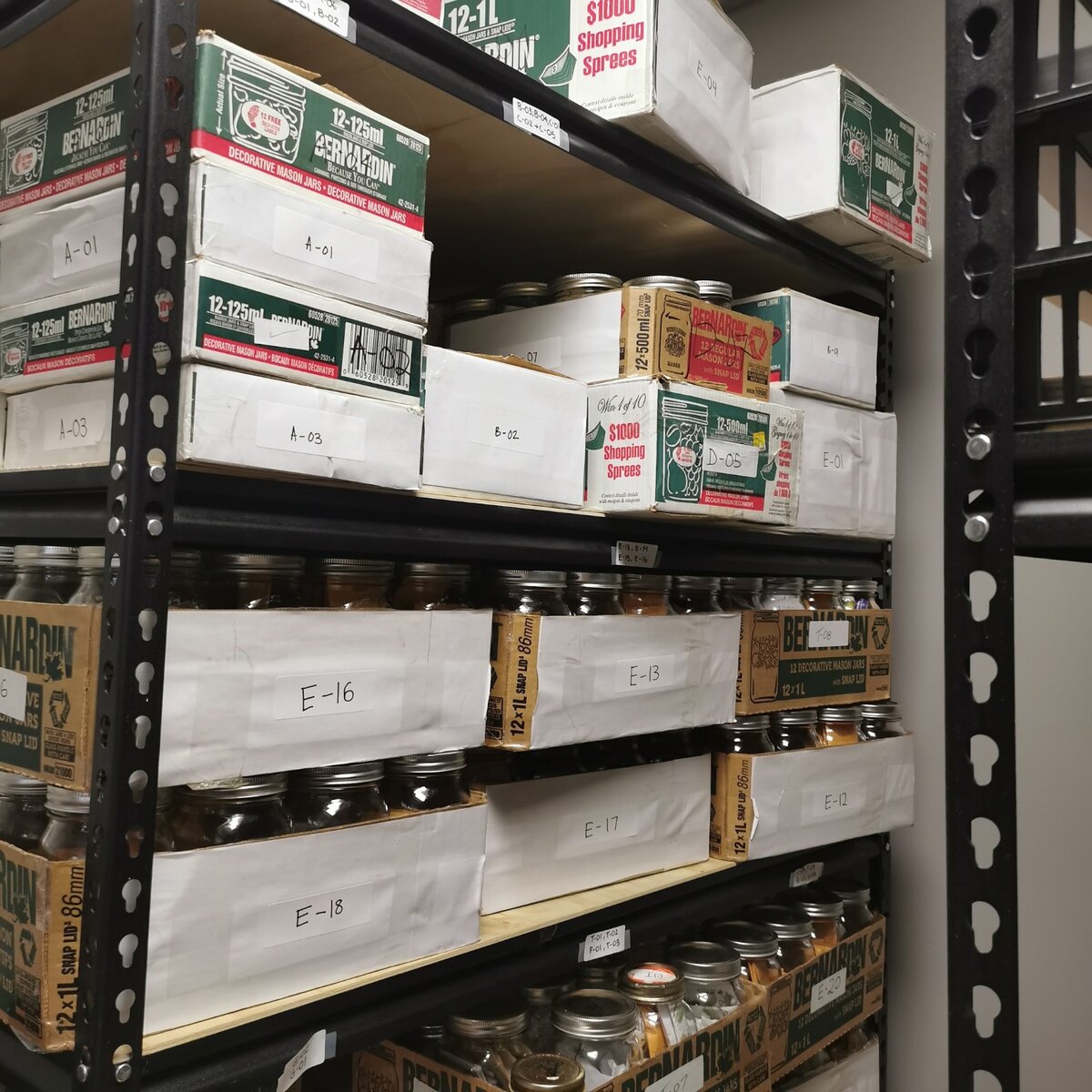
The seeds in our working collection are room-temperature. |
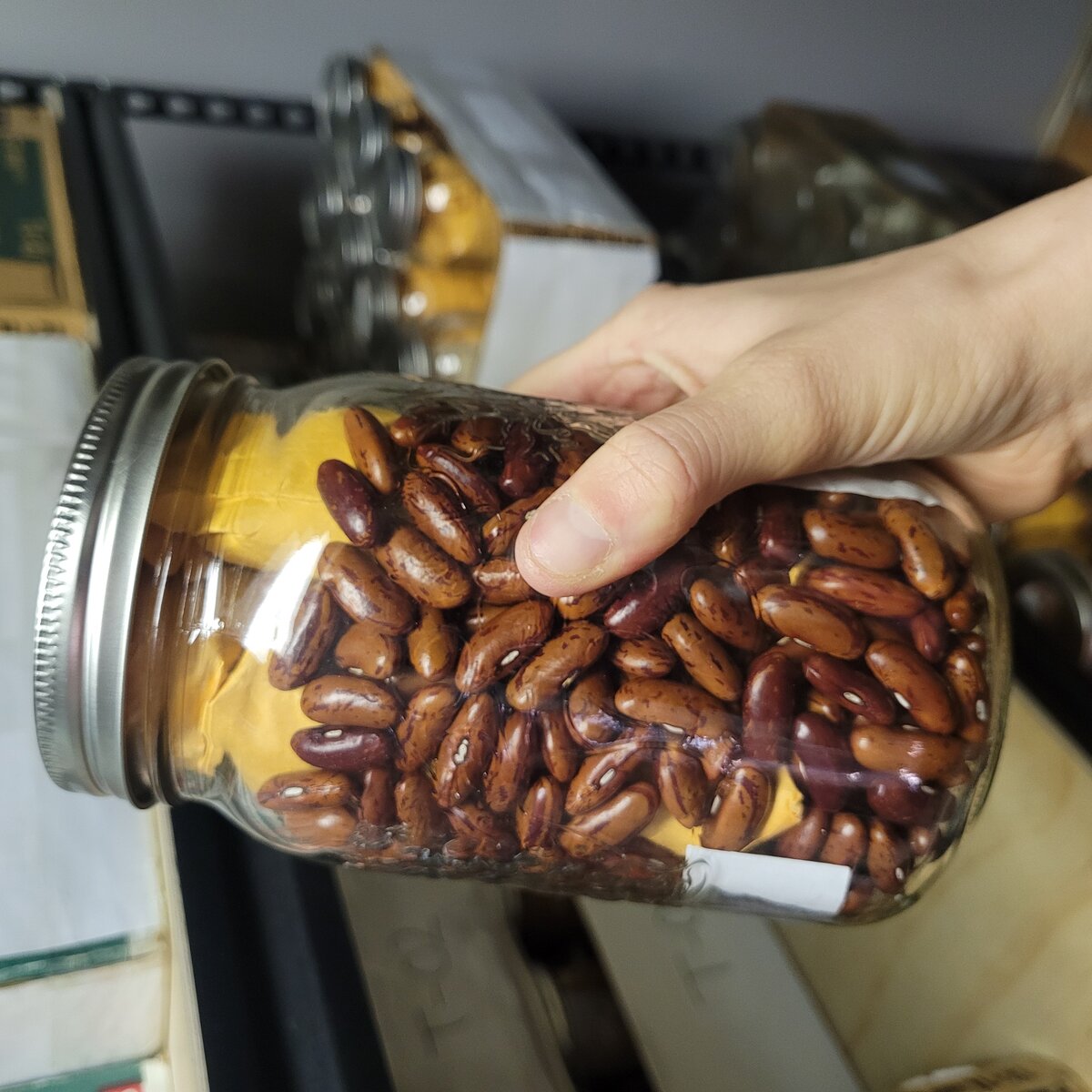
We expect these seeds to last 5-10 years depending on the species, which is long enough to distribute them to seed savers to re-multiply, and to diversify gardens across the country. |
The Back-up Collection
About 20km away, in an unglamorous basement, we keep a duplicate collection in deep-frozen storage. These seeds are much more difficult to work with on a daily basis, but they should last for decades, and we treat them as a back-up. We've only had to use them a few times, but it was a delight to find that those very old seeds still germinated.
To freeze seeds, it's crucial to dry them very well. Any excess moisture inside the seeds will crystalize and damage them. To prepare seeds for long-term freezing, we dry them fully with silica gel.
It's also difficult to access the seeds in the frozen jars because the moment we open them, condensation forms on the inside of the glass. The only proper way to get seeds out is to take the jar to a dry upstairs room, remove the seeds, and re-dry the jar's interior with silica gel once again. This is why we have the shorter-term Working collection for daily work.
Standard canning jars would work well, but we've chosen to use a kind of Kilner jar with a thicker rubber seal that's more durably air-tight.
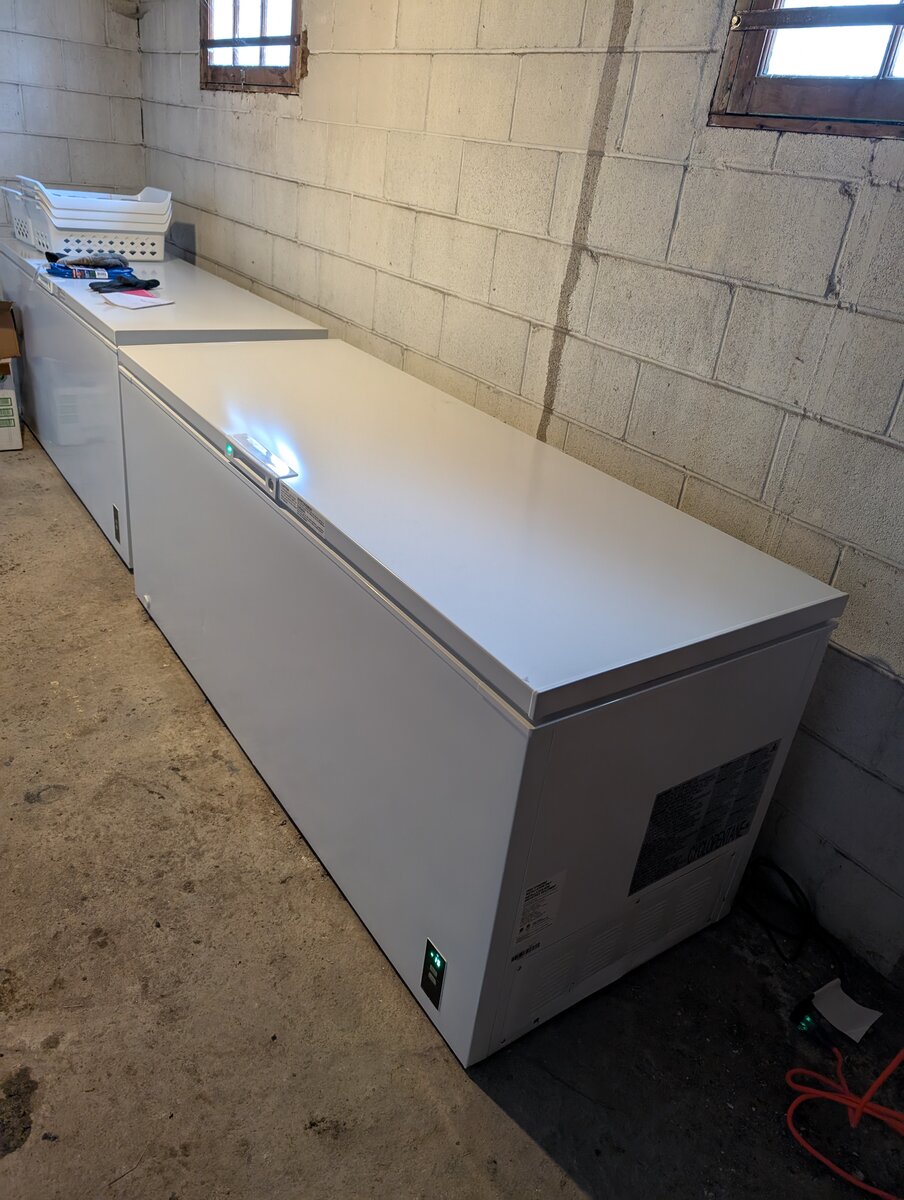
These freezers hold our back-up seed collection. |
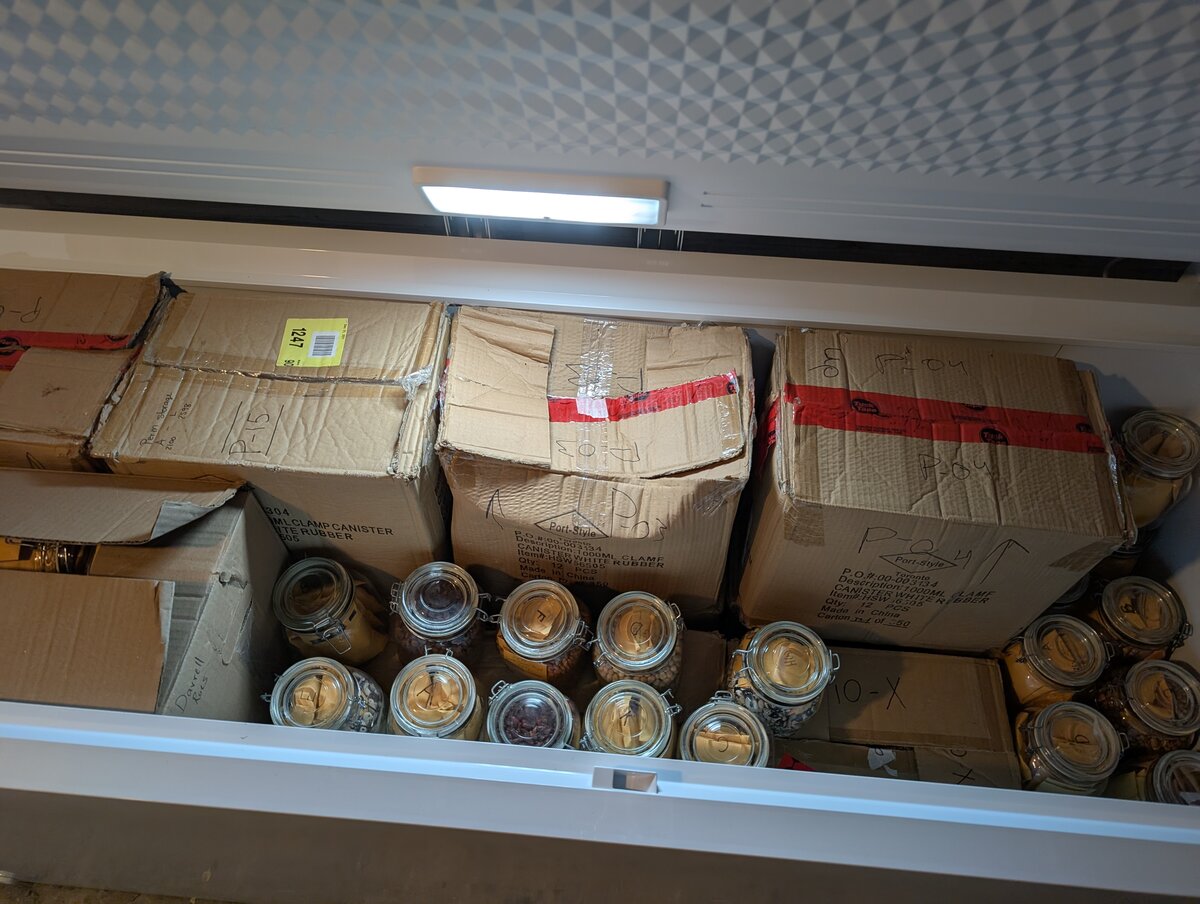
They may not look like much, but there are over 4000 samples of seeds safely stored here. |
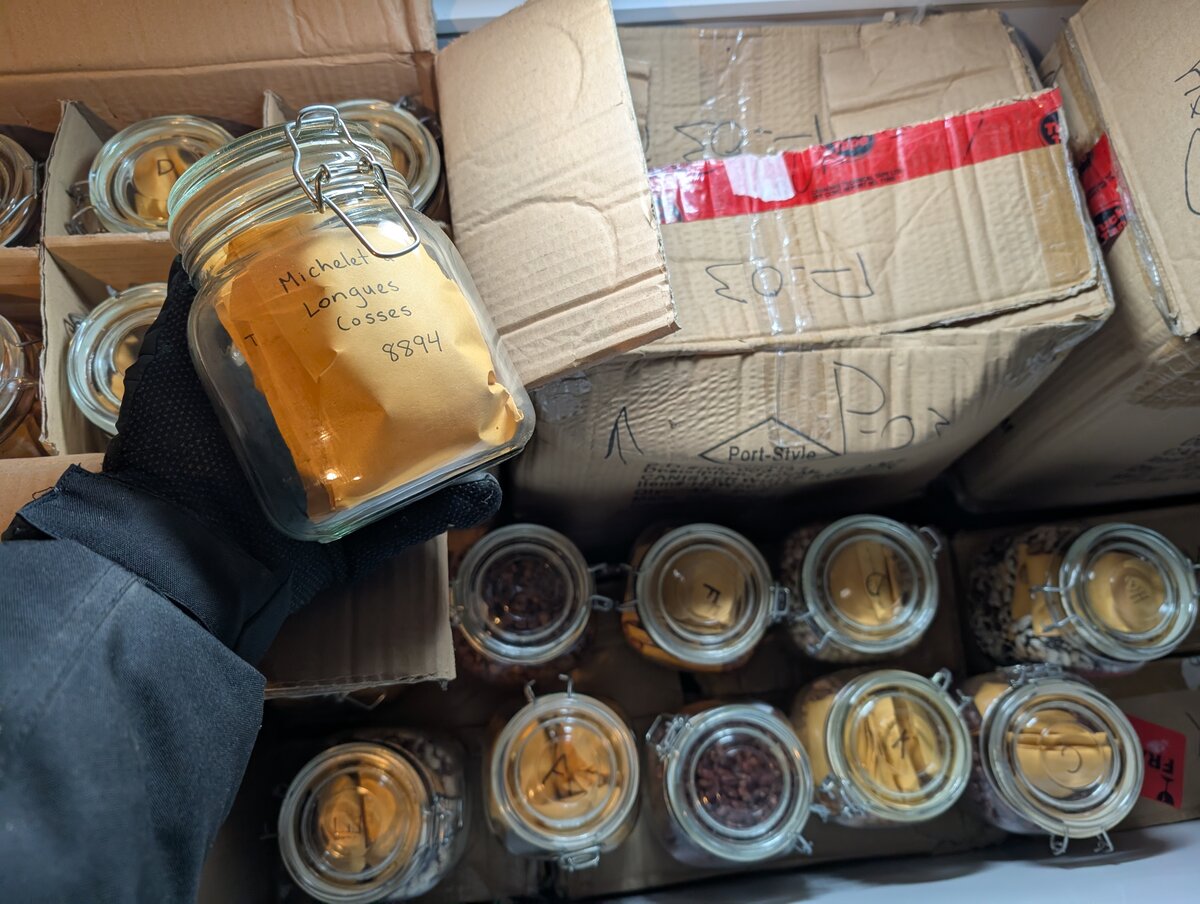
Every sample has a number, and the boxes are carefully organized so we can find seeds quickly. |
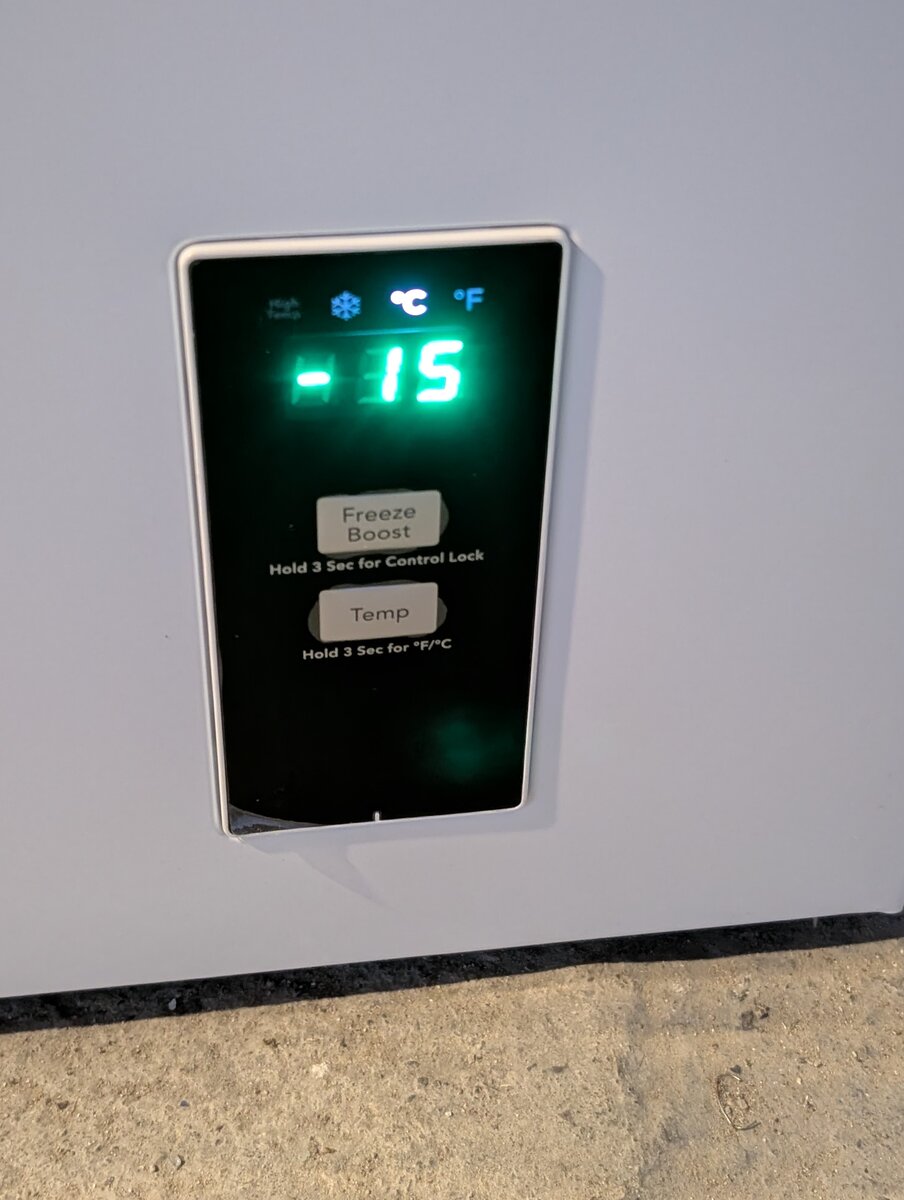
At minus 15 C, the jars are difficult to handle with bare hands, but the seeds last for decades. |
Drying seeds with silica gel
Sometimes it's good enough to rely on dry Canadian winter air. If you have seeds in an open container, or a breathable paper bag, in late November through early March, you can count on them to be dry enough to put in a glass jar without mould forming. But if you want to jar some seeds in the humid air of August or September, it's best to dry them first.
It's especially important to dry seeds that you are going to freeze, to prevent damage from ice crystals.
Our method just uses plastic tubs, a garbage bag, and silica gel that you can buy at craft stores (for drying flowers). A bed of silica gel on the bottom of the tub, or in a pan, will dry out the air inside the tub, and also remove excess moisture from the seeds. A garbage bag, carefully inspected for holes, seals the top of the tub, and five days later we quickly put the lids back on.
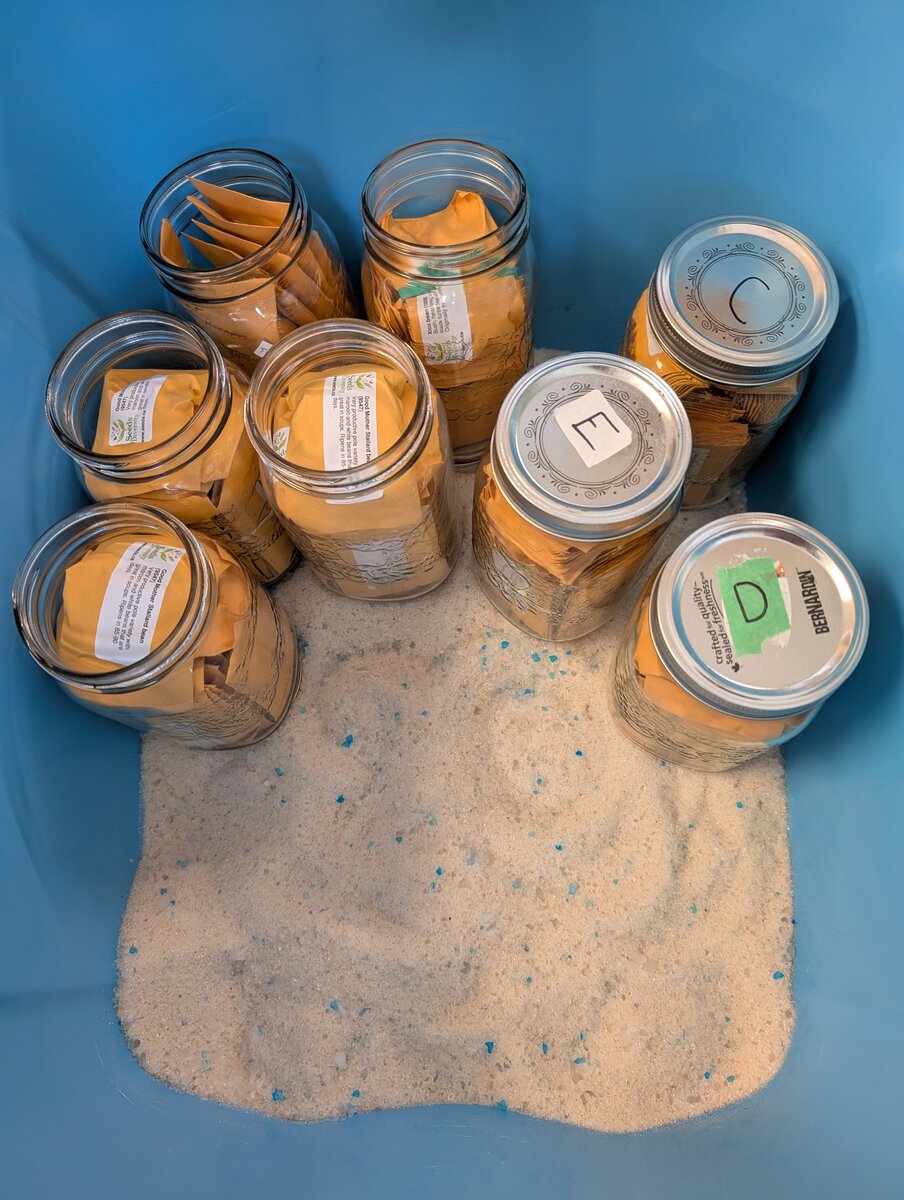
Open jars are placed on a bed of silica gel, in a plastic tub. When we open the jars on the right, we'll put each lid underneath the jar to make sure we keep our labels straight. |
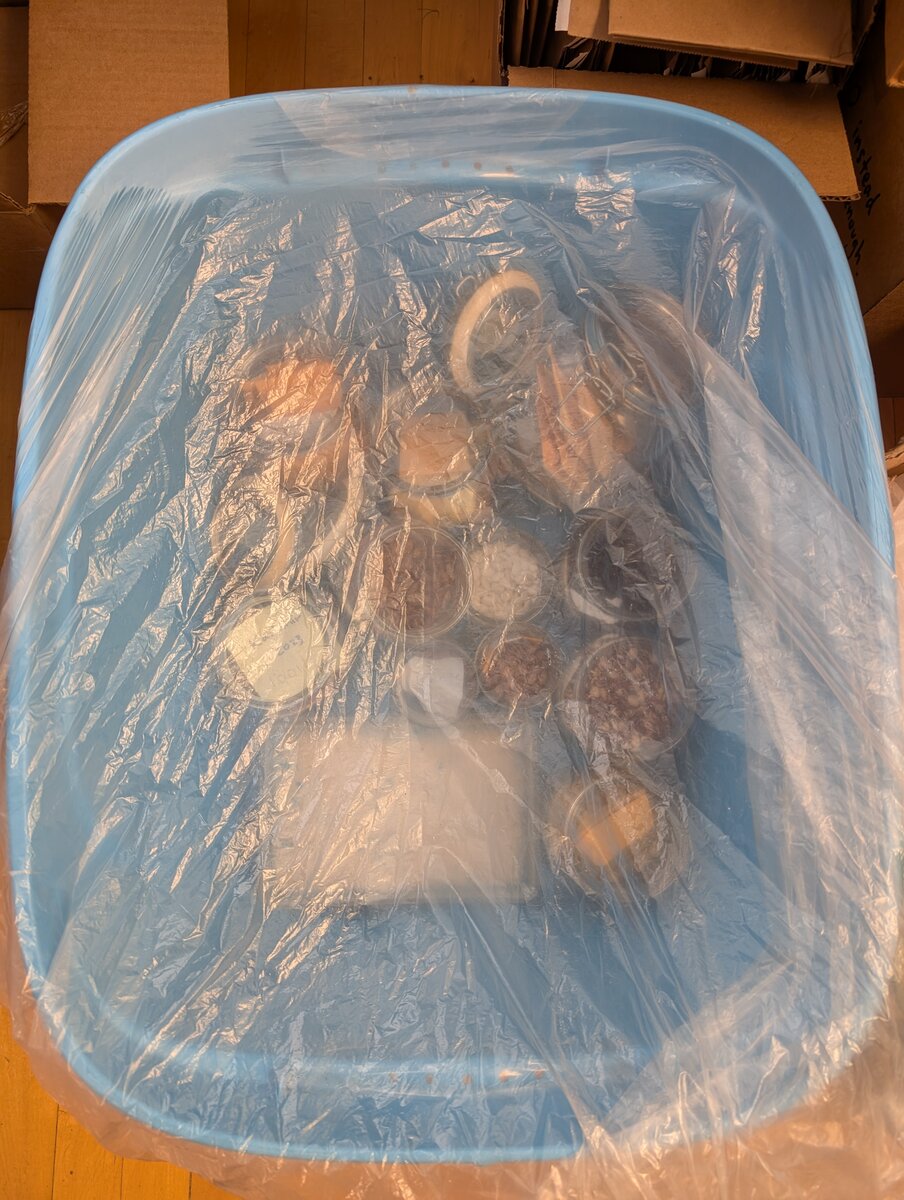
A garbage bag seals the top, allowing the silica gel to draw excess moisture from the seeds and the air in the jars. After 5 days, we quickly seal the jars. |
How can you preserve your seeds at home?
Our methods are simple, but effective, and our success comes more from technique than from expensive equipment. Anything we do at Seeds of Diversity you can do at home too. It's more than just a way for us to save money: it's how we help empower gardeners and seed savers everywhere to preserve seeds well. Everyone can learn how to store seeds for longevity, using basic things that every home has - like canning jars.
Here are a few tests you can try to see if your seeds are dry enough to put in air-tight jars:
- For large, flat seeds (e.g. squash) use the Bend Test: Try to bend a seed – if it’s flexible, it’s not dry enough. A dry seed will break when bent.
- For large, rounded seeds (e.g. beans, corn) use the Hammer Test: Hit a seed with hammer. If it flattens, it’s not dry enough. A dry seed will shatter when hit.
- For smaller seeds (e.g. lettuce, tomato, carrot) use the Rub Test: Rub a seed between 2 pieces of paper. A dry seed won’t leave any moisture marks on the paper.
- Perform all tests on a number of seeds taken from different areas on your tray or drying rack – not all areas always dry evenly.
Keep your seeds dry and cool
Basements, refrigerators, and garages are all cold places, but they're also very damp places, which is fatal for seeds. Try this - put your seeds in glass jars, in a dry room, then put the jars in a basement, garage, or fridge (if you have room). Then your seeds will be cold and dry, and they'll last a long time.
Avoid heat
It might be tempting to dry your seeds with a dehydrator, or an oven on "low". That works for drying food, but you have to be careful with seeds: temperatures over 40°C (about 100°F) can harm living seeds.
 There is lots more information about saving seeds in our handbook How to Save Your Own Seeds, available on our web site for $20 including shipping.
It makes an excellent Christmas gift for your favourite gardener.
Here's a simple trick for choosing a good place to store your seeds: measure the temperature in degrees Fahrenheit, and the percentage of relative humidity. If the sum of those numbers is less than 100, you've found a pretty good place to keep seeds in the open air.
°F + %RH < 100
The lower the temperature the better, and especially the lower the humidity the better, so try these methods too:
How long will seeds last?
Exactly how long your seeds will last depends on many variables. Generally, bean seeds usually last for 3-5 years if they're dry and room temperature, tomato seeds can live for up to 10 years in the same conditions, and other vegetable and flower seeds normally keep somewhere between 2-6 years.
Here are some tips to get you thinking about seed storage:
- Every 6°C (about 10°F) of lower temperature will double a seed's lifespan (at typical temperature ranges).
- Every 1% of moisture removed from a seed will double its lifespan (to a certain point; you can fatally overdry them if you use heat).
- Seeds dried in silica gel, or very dry open air ( < 30% humidity ), will not be damaged by freezing. Then you can really make them dormant!
- Remember to keep seeds in air-tight jars in a fridge or freezer, because the humidity is higher than you think. (There wouldn't be frost in your freezer if there weren't moisture in the air).
**
Bob Wildfong is the Executive Director of Seeds of Diversity, and has been saving seeds for over 30 years.
Not yet a member?
An annual membership to Seeds of Diversity gives you access to our seed exchange, seed grow-out programs, and our online news.


We depend on donations to do our work.

Thank you for your support!
Stay in Touch!


